A roof certification can support an insurance renewal, but it does not guarantee coverage. A roof inspection for insurance renewal documents the roof’s condition. In some cases, an inspection finding that the roof is in good condition may satisfy an insurer’s replacement requirement.
It’s understandable to focus on the roof’s age or the insurer’s recommendation. But age alone doesn’t show whether a roof has failed or needs replacing. The inspection report matters because it records visible concerns and helps identify where repairs may be needed.
This article explains what a roof certification means and how to read an insurance inspection report, including findings about flashing and roof penetrations. These details matter because deteriorated areas around chimneys, vents, and other openings can affect how well the roof sheds water. You’ll learn what an inspection can establish, how report recommendations may relate to renewal, and how an assessment can clarify whether repairs or replacement are the next step.
Key Takeaways
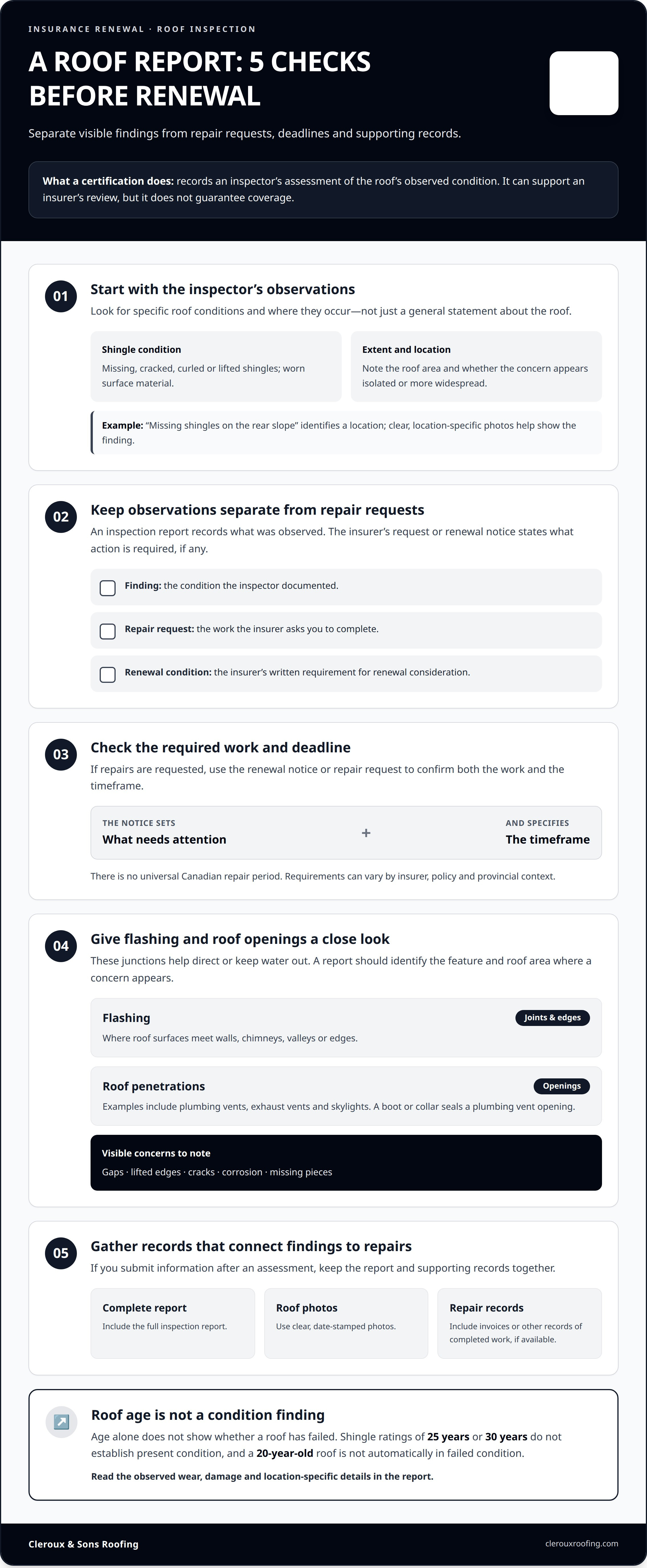
- A roof certification records an inspector’s assessment of the roof’s condition; its value depends on what the report documents, not age alone.
- Learn how to distinguish observations, repair recommendations, and insurer deadlines in an inspection report.
- Flashing and roof penetrations deserve close attention because these areas can affect how well the roof keeps water out.
- Inspection costs depend on the roof and the scope of the assessment, so a clear quote should reflect the work and reporting involved.
What Is A Roof Certification?
For an insurance renewal, a roof certification is a written assessment of the roof’s observed condition. In some cases, an inspection confirming that the roof is in good condition may satisfy an insurer’s replacement requirement.
If the inspection flags issues, an insurer may require repairs by a set deadline. The renewal notice or repair request states the required work and timeframe.
Independent Pre-Inspection Assessments
An independent pre-inspection is a professional review completed before an insurer’s requested assessment. It can help identify visible concerns early and clarify what the later inspection may document.
For example, an inspector might note a lifted shingle near the roof edge or loose-looking flashing, recording each location in the report. This gives you a clearer picture of the roof before the insurer reviews it. A preliminary assessment doesn’t replace the insurer’s inspection or determine what the insurer will accept, but it can help distinguish a repair concern from general wear.
Roof Certification and Leak Assessment
A roof certification is a written professional assessment of the roof’s observed condition. Its findings can help an insurer consider whether replacement is necessary or whether the documented condition meets its requirements.
A leak assessment looks for signs of water entry, such as interior staining, and related visible roof concerns. The report can note whether issues appear near roof coverings, flashing, or openings such as vents. These details help connect a leak with a specific area that may need attention. If the insurer requests repairs, its stated timeframe determines when the work must be completed.
Physical Shingle Condition
A shingle assessment records visible wear and damage across the roof, rather than relying on age alone. An inspector can note missing, cracked, curled, or lifted shingles, along with areas where the surface material appears worn.
Some shingles are rated for 25 years, while others are rated for 30 years; those ratings don’t establish the roof’s present condition. The inspection report should describe what is visible, where it occurs, and whether the affected area appears isolated or more widespread. For instance, a missing shingle in one spot is a different observation from repeated curling across several roof slopes. Clear descriptions and location-specific photos help make the findings easier to interpret.
Understanding insurance inspection reports
An insurance inspection report records the roof’s observed condition and any concerns relevant to renewal. Review each finding alongside the insurer’s requested action and deadline.
Interpreting Insurance Inspection Reports
An inspection report turns visible roof conditions into written observations for the insurer to consider. Separate the inspector’s findings from repair recommendations or renewal conditions.
For example, “missing shingles on the rear slope” identifies a location, while a repair request explains what needs attention. If you submit information after an assessment, provide the complete report and clear, date-stamped roof photos. Include repair invoices or other records of completed work, if available. These materials can link the reported concern to the repair performed.
Old Roofs and Renewal Decisions
An older roof can draw attention during renewal, but age alone doesn’t prove that it has failed. A 20-year-old roof does not automatically mean the roof is in failed condition.
An insurer may make renewal decisions based on its underwriting criteria and the roof’s documented condition. If an inspection identifies concerns, the insurer may require repairs by a set deadline. Check the renewal notice for the required work and deadline. There is no universal Canadian repair period; the notice sets the timeframe.
Differences in Inspection Requirements
Inspection and renewal requirements vary by insurer, policy, and provincial context. Canada has no single roof-inspection process that every insurer follows.
One insurer may request an inspection or documents before renewal, while another may focus on specific roof conditions. For homeowners in Windsor, Ontario, the relevant instructions are those in their own renewal notice. The insurer’s written request identifies the report or supporting documents needed and whether a repair deadline applies.
Damage That Can Affect Renewal
Visible defects that may prompt repair requests include missing or cracked shingles, lifted roofing, and signs of water entry. A report may also note deteriorated flashing or concerns around vents and other roof openings.
For example, a leak stain beneath a roof penetration may lead an inspector to document both the interior evidence and the related exterior area. Location-specific findings help show what needs attention. An insurer’s decision depends on its assessment of the documented condition; one defect does not automatically mean renewal will be denied.
Flashing and roof penetrations
Flashing is shaped material installed where roof surfaces meet walls, chimneys, valleys, or edges. It helps direct water away from joints and onto the roof covering. Roof penetrations are openings or structures that pass through the roof, such as plumbing vents, exhaust vents, and skylights. Water can enter at these junctions if flashing is loose, damaged, or poorly fitted.
A chimney shows why these details matter. Its sides meet the shingles, so flashing must cover the junction and direct runoff down the slope. Around a plumbing vent, a boot or collar seals the opening against water. An inspector looks for visible gaps, lifted edges, cracks, corrosion, or missing pieces. The report can identify the specific feature and roof area instead of noting only a general concern.
Interior water stains can help direct attention, but they don’t always reveal where water entered. A ceiling mark below a skylight, for example, may relate to the flashing, a nearby roof joint, or another path the water followed. An inspection compares visible interior evidence with exterior conditions where accessible. The written findings should distinguish an observed defect, such as separated flashing, from a suspected source that needs further assessment.
For an insurance review, precise descriptions clarify the nature and location of a concern. “Damaged flashing beside the chimney” gives more useful context than “possible roof leak.” Photos can show the area and help explain the finding alongside the report. A repair recommendation should address the documented issue, such as securing loose flashing or repairing a damaged vent boot. The insurer then considers the findings under its own renewal criteria.
Flashing and roof penetrations deserve close attention because a small gap at a junction can let water beneath the roof covering. A sound-looking shingle field doesn’t rule out a defect around a chimney, vent, or skylight. Recording these details gives the report a clearer picture of vulnerable roof transitions, rather than relying only on broad statements about overall condition.
How much does a roof inspection cost in Canada in 2026?
The cost of a roof inspection in Canada depends on the property and the inspection’s scope. A quote can account for the roof’s size, slope, access, materials, and reporting needs. An insurer-requested assessment may require specific documentation, which can affect the work involved.
For example, a straightforward pitched roof with clear access may need a different inspection scope than a steep roof with several sections, skylights, chimneys, or visible concerns. Roof height and safe access also affect how the assessment is carried out. Reviewing several areas may take more work than assessing a single concern.
Before requesting a quote, gather the insurer’s written instructions and renewal deadline. Include the property location, roof type if known, and any concerns named in the notice. Sharing any requested findings or photos helps define the report’s scope and reduces the chance of paying for an assessment that doesn’t address the insurer’s request.
Ask for a quote that clearly describes the inspection and report included. If it matters to the insurer, confirm whether the scope covers exterior observations, interior signs of water entry, or both. An inspection documents observed conditions; repairs are separate work and can affect the total project cost. For example, a report noting a damaged vent boot doesn’t include replacing it.
For homeowners in Windsor, Tecumseh, LaSalle, Amherstburg, Leamington, and Kingsville, the roof design and the insurer’s documentation request are practical starting points for defining inspection scope. Comparing a quote with the insurer’s request helps show whether the proposed assessment addresses the renewal concern.
To discuss the inspection scope and factors that shape a quote, request an inspection quote.
Cleroux & Sons Roofing: Thorough inspections with full reports
Cleroux & Sons Roofing provides thorough roof inspections with full reports for homeowners preparing for an insurance renewal. The report can document observed concerns, including wear, damage, and areas that may need attention, helping you understand the findings alongside your insurer’s request.
If the assessment identifies a repair issue, roof repairs may address it. If the roof’s condition points to more extensive work, a pitched roof installation or replacement may be the next consideration. The right option depends on the roof’s condition and the work needed, not age alone.
For a professional assessment and a written account of the findings, contact Cleroux & Sons Roofing.
Move forward with a clear roof plan
A roof inspection for insurance renewal gives you a practical basis for deciding what to address next. Use the insurer’s written request to guide the conversation, then consider the roof’s documented condition before committing to repairs or replacement. A clear plan keeps renewal decisions grounded in your home’s actual needs.
Cleroux & Sons Roofing provides thorough inspections with full reports, roof repairs, and pitched roof installations and replacements. These services help homeowners move from understanding a concern to considering appropriate work for their roof.
Share your renewal concern and take the next step with Contact Cleroux & Sons Roofing. A well-informed decision starts with a clear view of the roof and the work it needs.
Cleroux & Sons Roofing for Roof Inspections
Cleroux & Sons Roofing provides thorough roof inspections with full reports to help you assess your roof as you prepare for an insurance renewal.
If the inspection identifies work to consider, Cleroux & Sons Roofing also provides roof repairs and pitched roof installations and replacements.
Frequently Asked Questions
Do Canadian insurers require a roof inspection for policy renewal?
Not for every Canadian policy. An insurer may request a roof inspection for insurance renewal if it needs more information about the roof’s condition. The request should explain what assessment or records it needs and give any deadline. For example, an insurer might ask for an inspection report before deciding whether to renew or set repair conditions.
What roof age or condition can affect home insurance renewal in Canada?
Roof age can influence an insurer’s review, but age alone doesn’t show that a roof has failed. An older roof with visible deterioration, recurring leaks, or unrepaired damage may prompt questions about its condition. For example, missing shingles and signs of water entry raise different concerns from an older roof without visible issues. Renewal decisions depend on the insurer’s assessment.
Who can perform a roof inspection for insurance renewal in Canada?
A professional roofing contractor can assess a roof and prepare written findings. Before arranging an inspection, use the insurer’s instructions to understand what credentials, report details, or documentation it will accept. If the insurer requests specific photos or observations, for example, the inspector can include them in the report. This helps ensure the assessment addresses the renewal request.
What does an insurance roof inspection report include?
A report typically describes the roof areas inspected, visible concerns, and supporting observations. It may include dated photos, notes about affected sections, and recommendations for further assessment or repair. For example, a finding about a rear roof slope is more useful when paired with a photo and a clear description of the issue. The insurer’s instructions can determine which details it needs.