A roof that needs replacing doesn’t automatically mean the buyer must pay the full cost. Negotiating roof replacement in a home sale can involve seller-arranged work, a credit or a shared contribution. A clear inspection report and written roofing estimate help both sides understand the work needed and discuss how to handle the expense.
It’s reasonable to want a sound roof without taking on an unexpected project just after closing. Separate urgent problems, such as leaks or structural damage, from wear that can be managed through future maintenance. Then make a specific request based on the documented findings.
This guide explains how to assess inspection findings, support a proposal with an estimate, and compare replacement, a seller credit or cost-sharing. It also covers what to put in writing so the agreed work or contribution is clear before the sale closes.
Key Takeaways
- Use the inspection findings to separate urgent roof defects from routine wear, and understand how your inspection contingency affects your options.
- Build a specific request around the roof’s condition, supporting documentation and a written estimate, whether you propose repairs, a price adjustment or shared costs.
- Compare seller-arranged replacement with a closing credit, and put any agreed contribution and terms in writing.
- Clarify the scope of replacement work before agreeing to share the cost; a detailed roof report can help inform that decision.
Assessing inspection reports and repair priorities
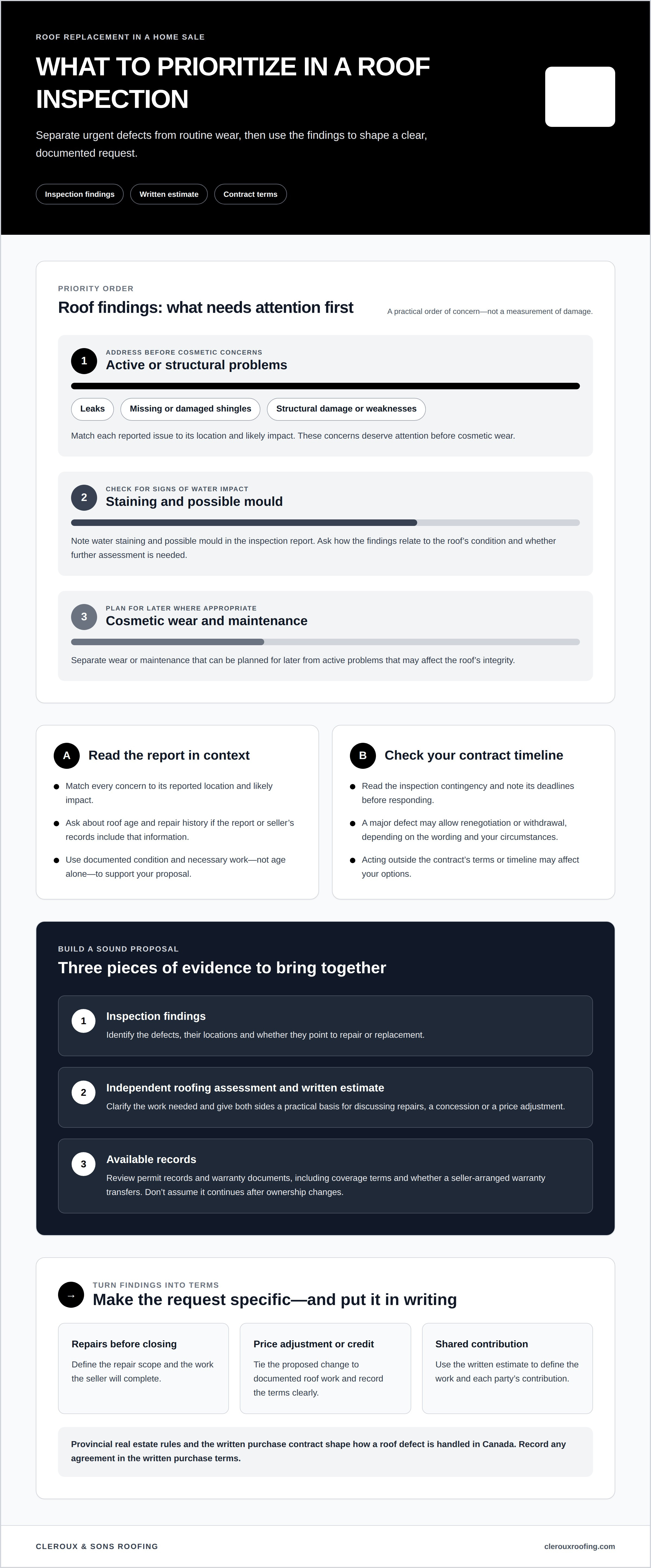
Use the inspection findings to distinguish urgent roof defects from ordinary wear, then decide what to raise during negotiations. Leaks, missing shingles and structural damage deserve attention before cosmetic concerns.
-
Review the Home Inspection Report
Match each concern in the inspection report to its location and likely impact. Look for missing or damaged shingles, signs of leaks, water staining, possible mould and notes about structural weaknesses. Ask about the roof’s age and repair history if the inspection report or seller’s records include that information. Separate active problems that may affect the roof’s integrity from cosmetic wear or maintenance that can be planned later.
-
Consider the Inspection Contingency
Read the inspection contingency in your purchase contract and note its deadlines before deciding how to respond. If the inspection identifies a major defect, the contingency may allow you to renegotiate or withdraw, depending on its wording and your circumstances. A roof that needs replacement can change the cost and risk of buying the home. Acting outside the contract’s terms or timeline may affect your options, so decide before the applicable deadline.
-
Check Rules, Quotes, Permits, and Warranties
Canada has no single roof-defect rule for every sale. Provincial real estate rules and the written purchase contract shape how a defect is handled. Before closing, get an independent roofing assessment and written estimate to clarify whether repairs or replacement are needed. Review available permit records and warranty documents, including coverage terms and whether a seller-arranged warranty transfers. An estimate and the inspection findings give you a practical basis for discussing repairs, concessions or a price adjustment. Don’t assume a warranty will continue after ownership changes.
Can I negotiate a new roof when buying a home?
Yes. You can make roof repairs a condition of your offer, but the seller must agree to that term. Negotiating roof replacement in a home sale can also involve a price reduction or shared contribution.
- Set out your preferred solution in a clear offer or counteroffer. Specify whether you’re asking for repairs before closing, a purchase-price adjustment or a contribution toward replacement afterward. If the seller is willing to address a repair but not replace the roof, for example, propose a defined repair scope or discuss sharing replacement costs. Negotiating roof replacement in a home sale works best when the request states the work and terms clearly. Record any agreement in writing.
-
Assess the Roof’s Effect on Selling Price
Compare the inspection findings with the asking price and the home’s overall condition. A roof needing replacement may affect the property’s value, but a new roof doesn’t rule out further price discussions. Base your proposal on the documented condition and necessary work, rather than the roof’s age alone. A roofing estimate can help explain how the repair or replacement affects your offer.
-
Consider Shared Costs or a Lower Offer
Choose a proposal that reflects the seller’s position and your plans for the home. You might offer below asking to account for replacement or ask both parties to contribute. Written estimates provide a practical basis for discussing the work’s scope and cost. If the seller has already replaced the roof, review its condition and available records before deciding whether to negotiate further. Put any agreed change in the written purchase terms.
Seller concessions and closing-cost credits
Choose between seller-arranged replacement and a buyer credit based on control, timing and the work required. Record the agreement in a written purchase-contract amendment signed by all parties.
-
Compare Seller Replacement with a Buyer Credit
Decide whether the seller will replace the roof before closing or contribute toward your own replacement afterward. Seller-paid work may simplify the handover, but the seller may choose a lower-cost option that doesn’t suit your preferences. A credit gives you more control over the work, while its form and amount need clear written terms. Compare the proposed scope with the roofing estimate before accepting either option.
-
Negotiate a Seller Credit at Closing
Ask for a specific credit tied to the documented roof work, and have the amount recorded in the signed agreement. A seller concession may be structured as a purchase-price reduction, a closing-cost credit or an escrow holdback. These options affect the transaction differently, so align the proposed credit with your purchase contract and financing arrangements. Don’t assume a closing-cost credit can simply be applied to future roof work.
-
Consider Risks of a Pre-Closing Replacement
Set out the replacement scope, completion timing and records the seller must provide before closing. A rushed job may leave you with a roof that doesn’t meet your expectations, and a seller-arranged warranty may not transfer to you. Review the completed work and warranty documents before finalizing the transaction. If the replacement terms are vague, negotiate clearer wording instead of relying on a verbal understanding.
Negotiating a shared roof replacement cost
- Begin with two or three written estimates that describe the same replacement scope. Compare included work, materials and disposal so the proposed split reflects equivalent estimates. A 50/50 division can be a starting point, not a fixed rule. Adjust the shares to reflect the roof’s condition, each party’s position and any other sale concessions.
- Agree on the contribution before discussing upgrades. For example, divide the base replacement cost equally, then have the buyer pay any increase for preferred materials or added work. This ties the seller’s share to the necessary roof work while giving the buyer control over optional improvements. Check whether the estimate includes repairs beneath the shingles, not just work on the visible surface.
- Define the replacement standard in writing. If the agreement specifies 30-year architectural shingles, name that material and describe the work included, rather than leaving “new roof” open to interpretation. State who selects the contractor, how the contribution will be handled, and what records the buyer receives. Clear terms help prevent a disagreement over whether the completed work matches the agreed scope.
- Set a practical plan for timing and completion. If the seller arranges the work, state the agreed completion point and require documentation of the finished replacement. If the buyer takes responsibility after closing, record the seller’s contribution and how it will be provided. A strong shared-cost proposal links each party’s share to a defined scope, so both understand the commitment before signing.
Cleroux & Sons Roofing: Pitched roof installations & replacements
Cleroux & Sons Roofing can help buyers and sellers assess a pitched roof when inspection findings affect a purchase decision. Its thorough inspections with full reports document visible concerns, helping clarify whether the roof needs repair or full replacement. A written account of the roof’s condition can give both parties a clearer basis for discussing the next step.
If the report identifies a localized problem, such as damaged shingles or a leak, roof repairs may address the specific issue. If the roof’s condition points to broader replacement needs, Cleroux & Sons Roofing provides pitched roof installations and replacements. This distinction matters in negotiations: the parties can discuss a defined repair scope or a replacement contribution instead of treating every roof concern as the same problem.
Buyers can use inspection findings to understand the work involved before agreeing to seller-arranged work, a credit or shared costs. Sellers can use a clear report to understand which concerns need attention and explain the roof’s condition during the sale. In either case, document the agreed scope and contribution in the purchase contract, and keep the roofing report with the transaction records.
For buyers in Windsor, Tecumseh, LaSalle, Amherstburg, Leamington and Kingsville, an inspection report can turn a roof concern into a specific decision. It can identify issues to discuss, support a repair plan or clarify why replacement is part of negotiations. The report describes the findings; the buyer and seller decide how to address them in their agreement.
Contact Cleroux & Sons Roofing to discuss a roof inspection, repair or replacement.
Frequently Asked Questions
What should I do if the seller is unwilling to pay for a new roof or compromise?
If the seller won’t contribute, decide whether the home still works for you at the agreed price. Compare the estimated roof work with your budget, then review your inspection contingency and its deadline. Depending on your signed offer, you may negotiate another term, proceed without a concession or withdraw under the contingency. Don’t assume you can cancel or recover your deposit without following the contract’s terms.
Will I be able to get a mortgage if the roof needs replacing?
A roof needing replacement doesn’t automatically prevent mortgage approval, but it can complicate the purchase. A leaky roof may affect an appraisal, and the roof’s condition may affect whether home insurance is available. Before waiving conditions, tell your lender and insurer what the inspection found. Ask how an unresolved defect affects their requirements, and account for any work or documentation they require before closing.
Who is responsible for replacing a roof before closing in a Canadian home sale?
The purchase agreement determines whether the seller must replace the roof before closing. No automatic responsibility applies to every Canadian sale. If the signed agreement doesn’t require replacement, don’t assume the seller must arrange it just because an inspection identified a problem. Review any written amendments too, since they may add specific work, completion terms or a seller contribution to the original agreement.
How can a buyer negotiate a roof replacement or price reduction after a home inspection in Canada?
Make a written proposal that links the inspection findings to a specific request. For example, identify the recommended replacement, attach the relevant estimate and ask for seller-arranged work or a purchase-price adjustment. You can also propose a shared contribution. State the requested scope clearly, and have any accepted change added to the purchase agreement and signed by all parties before relying on it.
Is it better to ask the seller to replace the roof, reduce the price, or provide a closing credit?
The best fit depends on whether you value seller-managed work or control over the replacement. A seller-arranged roof may simplify planning, but you may have less say in material selection. A price reduction changes the agreed purchase price; a closing credit is handled through the transaction and may not become cash for future work. Ask your lender how each option fits your financing before choosing.
Can an old or damaged roof affect mortgage approval, home insurance, or closing in Canada?
A roof replacement can affect the transaction, but an older roof alone doesn’t mean mortgage approval or closing will fail. A leak or other damage may affect the appraisal, while an insurer’s decision can affect your ability to arrange coverage. Raise roof findings with your lender and insurer early, and identify any work or documents they require. If replacement must happen before closing, record the completion terms in the agreement.