Replacing the roof before a sale may not be the best way to protect your asking price. You may not need to replace your roof to sell your home: age alone isn’t decisive, and there’s no general rule requiring sellers to install a new one. The roof’s condition and a professional assessment matter more.
A worn or leaking roof can raise concerns during an inspection and affect buyers’ offers. It may also prompt questions about financing or insurance. A new roof, however, doesn’t guarantee you’ll recover its full cost in the sale price, so weigh the work against the home’s likely resale value.
This guide explains when replacement may be worthwhile, when a targeted repair or selling as is may make more sense, and how roof condition can affect a sale. You’ll also learn what to consider about costs, inspection findings, buyer negotiations, financing, and insurance before deciding how to proceed.
Key Takeaways
- Roof age alone doesn’t decide whether replacement is worthwhile; a professional assessment can clarify the roof’s condition and remaining life.
- A worn or leaking roof may affect buyer offers and raise inspection, financing, or insurance concerns.
- Compare replacement with a targeted repair, a price adjustment, or selling as is with the roof’s condition disclosed.
- Weigh the roof’s condition against resale value, since buyers may value a sound roof without paying back the full replacement cost.
How a worn roof can affect offers, inspections, financing, and insurance
A leaking or visibly failing roof can deter buyers and lead to lower offers. Inspection findings help clarify whether repair or replacement is appropriate.
Inspection findings and contractor scopes
A contractor’s inspection records visible wear, leaks, damaged flashing, and areas needing attention. A written scope distinguishes localized repairs from broader replacement work and describes the proposed corrections. The inspection explains why the roof raised concerns for buyers, while the scope sets out the work being proposed.
Written roof condition assessments
A pre-listing inspection gives you a dated record of the roof’s condition before buyers arrange their own review. A written assessment can document observed defects, affected areas, and recommended next steps. Don’t climb onto the roof to assess it. Unlike a contractor’s work scope, an assessment records the roof’s condition to support disclosure and negotiations, rather than detailing the work to be done.
Remaining roof lifespan
Roof age provides context, not a verdict: asphalt shingle roofs typically last 15 to 25 years, depending on quality and exposure. An inspection can identify wear, including leaks or damaged materials, that affects the remaining-life assessment. Compared with age alone, this estimate gives buyers a clearer basis for judging upcoming work and helps sellers explain whether repair or replacement is proposed.
Offers, financing and insurance effects
Visible failure can reduce buyer interest and prompt offers that account for repair or replacement cost. An inspection may lead buyers to negotiate; lenders or insurers may also have requirements before closing. Compared with an offer adjustment, a financing or insurance requirement may call for work before the sale proceeds. Insurance may cover hail damage; coverage depends on the policy, and the Insurance Bureau of Canada offers home insurance guidance.
| Option | Sale evidence | Buyer concern |
|---|---|---|
| Written assessment | Observed condition | Remaining roof life |
| Repair scope | Localized work | Other roof concerns |
| Replacement scope | Broader work proposed | Work timing and permits |
| As-is disclosure | Known condition | Future costs |
Choose an option that fits the inspection findings and the concerns affecting the sale.
Is it worth replacing a roof before selling a house?
Whether you need to replace the roof before selling depends on its condition, remaining life, and likely effect on the sale. Age alone doesn’t require replacement, and an older roof doesn’t automatically prevent a sale.
Replacing the roof before selling
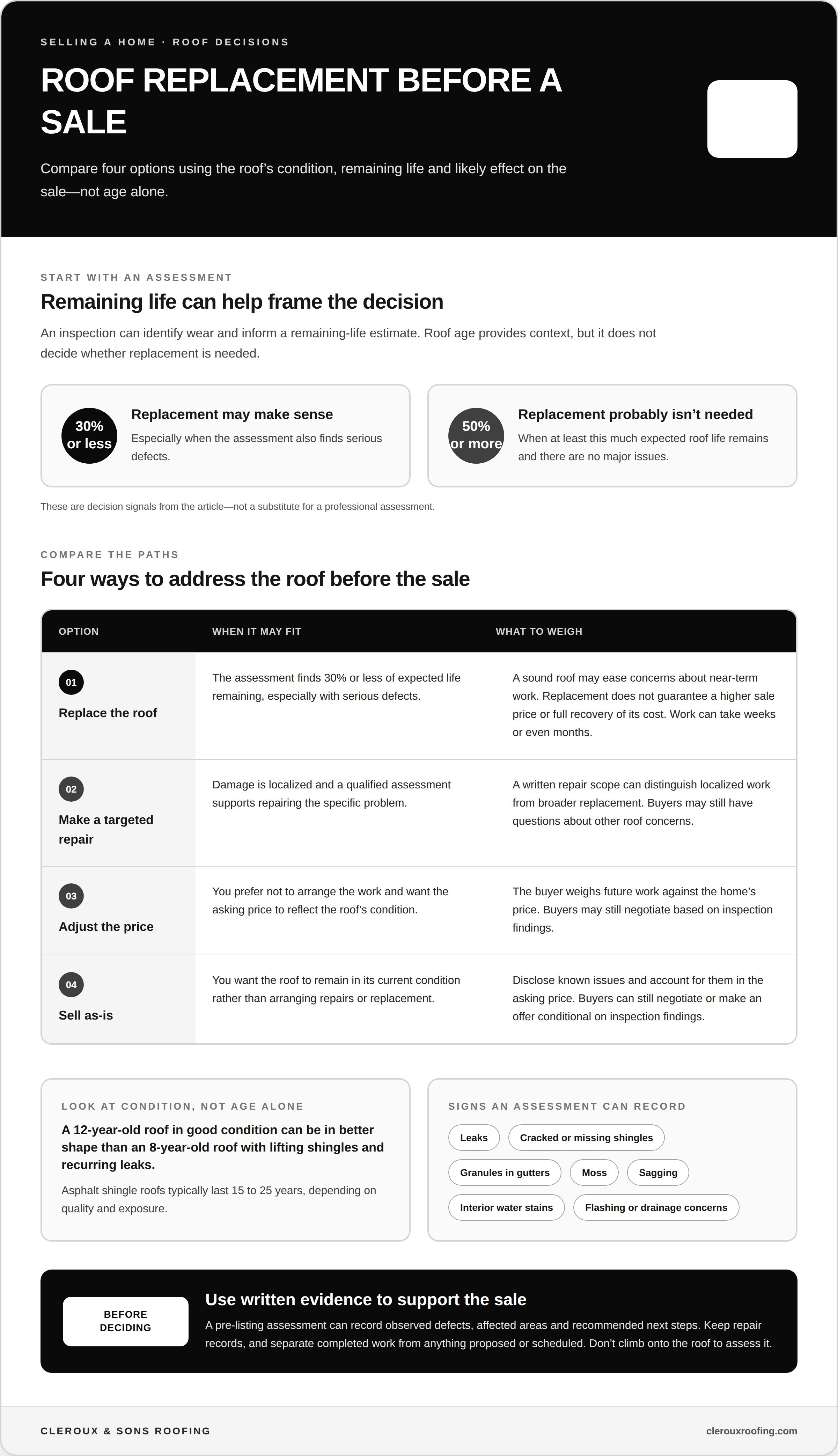
Replacement may make sense when an assessment finds the roof has 30% or less of its expected life remaining, especially if it has serious defects. A sound roof can reduce buyers’ concerns about near-term work and help present the home more confidently. However, a new roof doesn’t guarantee a higher sale price or full recovery of the replacement cost. Work can take weeks or even months, so timing matters when setting a listing date.
Alternatives to roof replacement
If damage is localized, a roof repair may address the specific problem without replacing the whole roof. A seller can also offer a price credit or adjust the asking price to reflect the roof’s condition. These options differ from replacement because they leave the buyer to weigh future work against the home’s price. If at least 50% of expected roof life remains and there are no major issues, replacement before selling probably isn’t needed.
If the roof is older but still has useful life, a written assessment can help explain its condition to buyers. Keep repair records, and distinguish completed work from anything proposed or scheduled. Clear documentation helps buyers understand the shingles’ condition, future maintenance, and any potential concerns about closing.
Selling as-is and disclosing roof issues
Selling as is means the roof stays in its current condition rather than being repaired or replaced before the sale. You can factor known roof issues into the asking price and disclose the condition to prospective buyers. This may suit sellers who prefer not to arrange work, but buyers can still negotiate or make an offer conditional on inspection findings.
Choose by comparing the assessment, likely work, timing, and effect on buyer interest. Discuss your roof’s condition and next steps before deciding which option fits the sale.
Assessing roof condition rather than relying on age alone
A Canadian home inspector reports on the roof’s condition and may recommend action; an inspection doesn’t pass or fail the roof. An appraiser considers roof condition when assessing property value, but neither assessment alone establishes that replacement is necessary. Financing or insurance requirements can still affect what needs to happen before closing.
Look at the actual condition, not just the installation date. A 12-year-old roof in good condition can be in better shape than an 8-year-old roof with lifting shingles and recurring leaks. During a professional assessment, signs such as cracked or missing shingles, granules in gutters, moss, sagging, and interior water stains help identify whether the concern is localized or widespread.
Gutters and drainage matter as well as shingles. Blocked or damaged gutters can affect how water drains away from the roof and home, so an assessment should note visible drainage concerns along with flashing and roof-covering defects. A targeted repair may suit a localized defect when supported by a qualified assessment. Widespread deterioration calls for a broader scope of work.
A buyer credit doesn’t override a lender’s or insurer’s requirement for roof work before closing. A price adjustment addresses the buyer’s costs, while a financing or insurance condition can affect whether the transaction proceeds as agreed. An appraisal considers roof condition, but it doesn’t replace a roof inspection or a contractor’s scope.
In Windsor, Tecumseh, LaSalle, Amherstburg, Leamington, and Kingsville, compare the roof with those on similar active listings and comparable homes. Note visible condition, completed work, and asking price, remembering that listing prices aren’t actual sale prices. Local comparisons provide context, but inspection findings should guide whether repair or replacement is appropriate.
Cost recovery and home resale value
A replacement can improve a roof’s condition, but it doesn’t automatically increase the sale price by the full amount spent. For sellers in Windsor and Essex County, the key is to weigh the roof’s current condition against likely buyer response and the home’s expected sale value.
Roof replacement and resale value
A sound roof removes a visible concern for prospective buyers, but buyers generally expect a functioning roof rather than treating it as a premium feature. Appraisers also consider roof condition when assessing a home’s value. Replacement may address visible defects, such as missing shingles or granules collecting in gutters, without adding the full replacement cost to the home’s value.
Compare the home with similar local sales, then consider whether the roof is affecting buyer interest or the property’s condition. The value of a new roof depends on the situation, including existing damage, remaining life, and the work completed.
Recouping roof replacement costs
Roof replacement before selling doesn’t guarantee full cost recovery. The 2025 Cost vs. Value Report found that asphalt-shingle replacement recouped about 67.5% of its cost at resale nationally. That figure is a broad benchmark, not a prediction for an individual Windsor-area home. Local sale prices, roof condition, material, and the property’s other features all affect the result.
Keep the completed-work records, itemized scope, and applicable warranty documents together. These help show buyers what was done, rather than leaving them to estimate future work from visible wear. If an assessment finds years of service remain, a seller may find that replacement costs more than it adds to the sale. Discuss a roof replacement assessment before weighing the work against expected resale value.
Cleroux & Sons Roofing: Pitched roof installations & replacements
Cleroux & Sons Roofing helps homeowners decide what roof work suits their property before listing. Thorough inspections with full reports document the roof’s condition and help clarify whether repair or replacement is appropriate. If broader work is needed, pitched roof installations and replacements address the roofing system rather than a single localized defect.
For a specific problem, a roof repair may be more suitable than replacing a roof that still has useful life. A clear assessment helps you weigh the work against buyer concerns, timing, and the home’s expected resale value.
Contact Cleroux & Sons Roofing to discuss your roof and possible next steps.
Set a clear next step for your sale
If you’re still weighing whether you need to replace your roof to sell your home, define what a successful sale means to you. Consider your preferred timeline, the condition you’re comfortable presenting, and how much uncertainty you’re willing to leave for negotiations. These priorities can turn a difficult decision into a practical plan.
To decide whether you need to replace your roof to sell your home, identify what information would settle the question. A clear decision point can help you move forward without letting uncertainty about the roof distract you from preparing the rest of your home.
Cleroux & Sons Roofing can help you consider the roof work that fits your property and sale plans. Contact Cleroux & Sons Roofing to discuss your next step, and move forward with a plan that feels right for your home.
Frequently Asked Questions
Does a new roof add value to a home?
A new roof can strengthen a home’s appeal, but it doesn’t automatically add the full installation cost to the sale price. Buyers may view it as reassurance that major roof work isn’t immediately needed, rather than a feature worth paying extra for. Records of completed work and warranty documents can show what was installed and clarify what remains covered.
Can I sell a house with a bad roof in Windsor?
Yes, you can sell a home in Windsor as is with a bad roof, provided you clearly represent its condition to prospective buyers. The roof’s state can be reflected in the asking price, and buyers may negotiate after reviewing the property. A written assessment and records of past work help describe the actual condition instead of leaving buyers to guess how much repair is needed.
Do I have to disclose a roof problem or past repair?
Be transparent about known roof problems and past repairs during the sale process. Keep inspection reports, repair invoices, and details of any unresolved leaks together so the information you share with buyers is accurate. Distinguish completed repairs from work that was only recommended. Clear records help prevent confusion about the roof’s history and completed work.
Does a new roof pay for itself?
Not necessarily. The resale price may not rise enough to cover the replacement cost, even if a new roof reassures buyers. Consider the roof’s condition, the work required, and whether buyers might otherwise seek a price reduction. If the roof is functional and has useful life remaining, replacing it solely to recoup the expense may not make financial sense.
How long does an asphalt shingle roof last?
An asphalt shingle roof typically lasts 15 to 25 years, depending on its quality and exposure. That range is a guide, not a condition report: two roofs of the same age can have different wear. For a home sale, note the installation date alongside observable issues and past repairs. A professional assessment can help explain how those details affect the roof’s present condition.
Is it better to replace the roof or offer a credit?
Replacement is more straightforward when the roof has widespread deterioration or a buyer’s lender or insurer requires work before closing. A credit or price adjustment may suit a localized issue or a buyer prepared to manage future work. Compare the assessment findings, proposed scope, and sale conditions before deciding. A credit doesn’t override a lender’s or insurer’s requirement for roof work.